


Designers of high-performance electronics and aerospace systems often face a localized crisis of physics: how to stop aluminum from oxidizing without turning it into an electrical insulator. Aluminum, for all its structural brilliance, is a reactive metal. Left untreated, it develops a dull, non-conductive oxide skin that ruins electromagnetic interference (EMI) shielding and compromises grounding points. While anodizing offers legendary protection, it builds a ceramic wall that blocks electricity entirely. This technical bottleneck is solved by chromate conversion coating, frequently referred to by the trade names Alodine or Chem Film. It is the invisible champion of the electronics industry, providing a microscopic chemical barrier that kills corrosion while keeping electrons flowing freely.
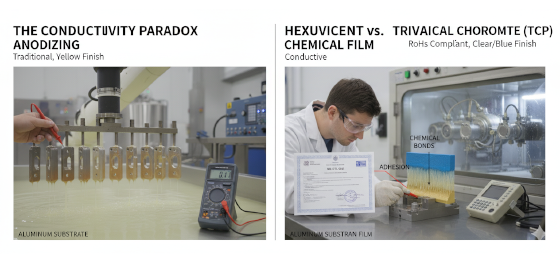
At Jucheng Precision, we integrate this critical finish into our CNC machining surface treatment ecosystem for projects where signal integrity and environmental survival are equally weighted. We understand that a successful chem-film is not just a dip-and-dry process; it is a delicate balance of surface activation and immersion timing. If the bath is contaminated or the rinsing is insufficient, the coating will fail to bond, leading to expensive failures in mission-critical hardware. This guide explores the chemistry of the conversion layer, the transition toward RoHS-compliant trivalent chromium, and the rigorous MIL-spec standards JUCHENG follows to ensure your complex assemblies remain fully conductive and perfectly protected.
Efficiency in surface protection requires a deep respect for the substrate's electrical needs. You cannot simply apply a finish for looks; you must apply it for the mission. Whether you are building a satellite chassis or a ruggedized server housing, understanding the mechanics of the chromate layer is the key to preventing "dead-on-arrival" electronic interference issues. Let us examine the technical pillars of chemical conversion and why it remains indispensable in precision CNC manufacturing.
Conductivity Paradox: The Grounding Imperative
Hexavalent vs. Trivalent: The Global Compliance Shift
Military Rigor: Navigating MIL-DTL-5541 Specs
The Bonding Foundation: Why Paint Needs Alodine
JUCHENG’s Standard: Verifying Contact Resistance
Conductivity Paradox: The Grounding Imperative
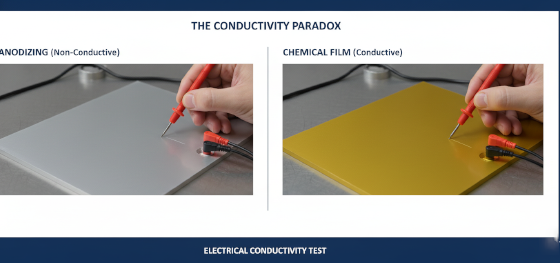
The primary reason an engineer specifies chromate conversion coating over anodizing is simple: electrical continuity. Anodizing creates a thick layer of aluminum oxide ($Al_2O_3$), which is a world-class electrical insulator. If you anodize a radio housing, you effectively turn the box into a series of isolated metal plates, destroying its ability to act as a Faraday Cage. This results in signal noise and potential internal sparking in high-voltage environments. Chem film, however, is a conversion process that produces an extremely thin gelatinous film, typically measured in angstroms or low microns.
This microscopic thinness is the secret to its success. It is thick enough to passivate the aluminum surface, preventing the growth of white corrosion, but thin enough to allow electrons to tunnel through the layer. At Jucheng Precision, we use this "Conductive Paradox" to help our clients design multi-functional parts. We often see parts where the exterior requires the hard, colorful finish of Type II anodizing, but the internal mating faces must remain conductive for grounding. By utilizing precision masking followed by chromate conversion, we deliver parts that are armored on the outside and electrically transparent on the inside. This dual-finish strategy is essential for telecom filters, avionics boxes, and high-frequency microwave components where every ohm of resistance matters.
Hexavalent vs. Trivalent: The Global Compliance Shift
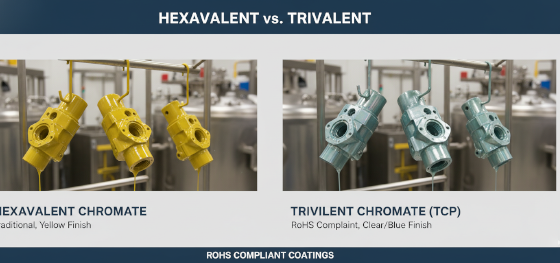
Historically, the world of chromate conversion coating was dominated by Hexavalent Chromium ($Cr^{6+}$). This is the "classic" Alodine finish, recognizable by its distinct iridescent yellow, gold, or tan color. It provides excellent corrosion resistance and has a unique "self-healing" property—if the coating is scratched, the hexavalent ions can actually migrate to the wound and re-passivate the metal. However, hexavalent chromium is a known carcinogen and is strictly regulated under RoHS (Restriction of Hazardous Substances) and REACH mandates. For companies shipping products into Europe or California, the yellow finish is increasingly a liability.
The industry has pivoted toward Trivalent Chromium ($Cr^{3+}$), often referred to as TCP (Trivalent Chromium Pre-treatment). This modern chemistry is environmentally safe and fully RoHS compliant. Trivalent coatings are typically clear or have a faint blue tint, which can make inspection more difficult since they don't have the high-contrast yellow of the old process. Jucheng Precision operates fully validated trivalent lines to support our global clients. We utilize "dye-indicators" in some cases to assist in visual inspection, ensuring that every square millimeter has been properly treated. While trivalent coatings lack the same self-healing capacity of their predecessors, modern formulations have closed the gap in salt-spray performance, often meeting or exceeding 168 hours of protection. We help you choose the chemistry that satisfies both your engineering goals and your regulatory obligations.
Military Rigor: Navigating MIL-DTL-5541 Specs
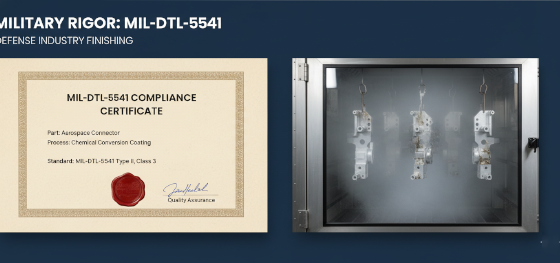
In the world of defense and aerospace, "doing it right" is not enough—you must do it to the book. The governing document for chromate conversion coating is MIL-DTL-5541. This military specification divides the finish into two classes: Class 1A and Class 3. Understanding the difference is vital for project success. Class 1A is designed for maximum corrosion protection and is often used as a base for paint. It is a thicker coating that prioritizes durability over conductivity.
Class 3 is the "Electrical Class." It is specifically engineered to maintain low contact resistance. It is a thinner, more controlled layer meant for electrical connectors, circuit board mounts, and EMI gaskets. At Jucheng Precision, we treat these military classes with surgical rigor. We monitor bath temperature, pH levels, and immersion times to the second. A Class 3 finish that is accidentally left in the tank for too long becomes a Class 1A finish—and a failed part if your grounding requirements are tight. We provide full documentation and mill test reports that reference these specific MIL-spec callouts, giving our aerospace partners the paper trail required for high-integrity aircraft and satellite components.
The Bonding Foundation: Why Paint Needs Alodine
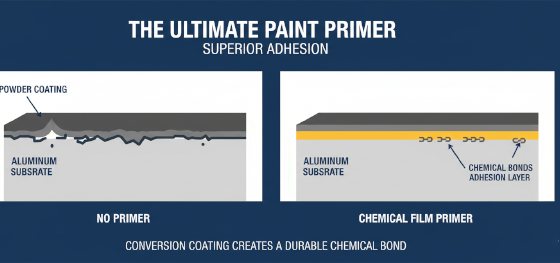
Beyond corrosion and conductivity, chem film serves a third, vital role: it is the perfect primer. Aluminum is notoriously difficult to paint. Raw aluminum develops a natural oxide layer that is slightly oily and very unstable. If you apply powder coating or liquid paint directly to raw aluminum, the coating will eventually flake off in large sheets, a failure known as delamination. Chromate conversion coating provides a stable, chemically active surface that "locks" onto the paint.
The microscopic "nooks and crannies" of the conversion film provide a high surface energy that increases the mechanical and chemical bond of the topcoat. JUCHENG recommends a chem-film pre-treatment for any aluminum part destined for high-durability powder coating. This dual-layer system—Alodine base plus polymer topcoat—is the gold standard for outdoor enclosures and marine equipment. It ensures that even if the paint is scratched, the aluminum underneath won't start to "creep" and lift the rest of the finish. We manage this integrated workflow in-house, ensuring that the time between the chem-film tank and the powder booth is minimized, preventing any surface contamination that would compromise the bond.
JUCHENG’s Standard: Verifying Contact Resistance

The final hallmark of a professional finisher is the ability to prove the performance. In the CNC machining surface treatment of electronic parts, the visual appearance of the chem film is secondary to its electrical performance. At Jucheng Precision, we don't just "dip and ship." We utilize specialized surface resistance probes to verify that our Class 3 coatings meet the specific micro-ohm requirements of your engineering drawing.
Our quality control team performs standardized contact resistance tests, measuring the millivolt drop across the surface under a specific load. This data is recorded and provided to our clients as part of their final inspection package. We also perform "Tape Adhesion Tests" (ASTM D3359) to ensure the film is structurally integrated with the aluminum substrate. Whether you are building 10,000 small electronic connectors or a single massive satellite chassis, Jucheng Precision has the technical rigor and the metallurgical expertise to deliver. We don't just provide a finish; we provide a verified engineering solution. Contact our team today for a full DFM review and see how our chromate conversion protocols can secure your next high-performance aluminum project.

