


Cutting solid plastics feels deceptively simple until you violently ruin a thousand-dollar engineering billet. Factory veterans know that grabbing a random block of plastic and throwing it blindly onto a high-speed milling center guarantees absolute disaster. Hitting heavy polymers with dull metalworking tools instantly generates extreme friction instead of a clean, shearing physical cut.
Melting plastic directly onto a spinning carbide endmill destroys the expensive cutting insert and leaves a horrific, torn surface finish. Executing flawless machining cast nylon requires stripping away the misconception that all plastics behave identically under an aggressive spindle. You cannot negotiate with the intense thermal dynamics of cutting tough polyamides at ten thousand revolutions per minute.

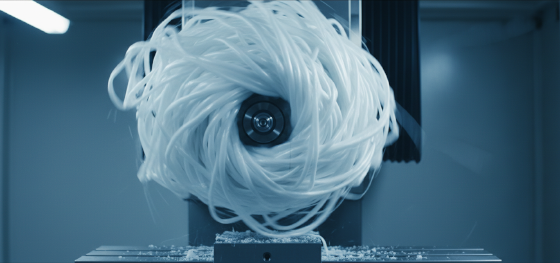
Mastering chip evacuation dynamics separates elite machine shops from amateur garage operations. Nylon is notoriously tough and stringy, producing massive continuous ribbons of waste material rather than neat, broken chips. Failing to flush these continuous ribbons out of the cutting zone allows them to violently wrap around the toolholder, creating a massive bird-nest that ruins the physical part and poses a severe factory fire hazard.
Procurement managers must rigorously audit their supply chain to ensure vendors utilize properly treated stress-relieved polymer billets before the first cut begins. Stripping the tough outer skin off a cheap, highly stressed plastic rod releases massive trapped internal kinetic energy. Operating out of the Shenzhen precision manufacturing hub equips our engineers to handle these violent dimensional shifts, strictly commanding raw material physics to deliver perfectly flat, functional components.
content:
Conquering Dangerous Chip Evacuation Dynamics
Demanding Stress-Relieved Polymer Billets
Calculating Moisture Absorption Tolerances
JUCHENG Hub: Dominating Heavy Duty Plastics
Frequently Asked Questions: Polymer Physics
Conquering Dangerous Chip Evacuation Dynamics
Can machinists use standard aluminum cutting tools to successfully mill heavy nylon blocks?
No. Standard metalworking tools possess blunt edge geometries that severely rub against the soft plastic, generating intense friction heat rather than cleanly slicing the tough polymer bonds.
Controlling aggressive chip evacuation dynamics requires highly specialized, razor-sharp polished carbide tooling. Single-flute or double-flute endmills provide massive open valleys for the stringy plastic ribbons to escape the high-pressure cutting zone. Utilizing tools with too many flutes traps the expanding waste material, instantly welding the hot plastic directly to the spinning steel shank.
Flooding the deep internal cavity with aggressive high-pressure coolant becomes absolutely mandatory when drilling deep holes into solid polyamides. Coolant lubricates the cutting edge and aggressively drops the localized temperature, preventing the plastic from expanding and aggressively grabbing the drill bit. Peck-drilling techniques physically break the continuous stringy chips into manageable pieces, ensuring safe and continuous machine operation without human intervention.
Clamping pressure introduces another terrifying variable on the factory floor. Because heavy plastics remain relatively soft compared to metal, utilizing heavy hydraulic steel vise jaws physically crushes and permanently deforms the raw stock before the machine even turns on. Experienced technicians strictly utilize customized soft aluminum jaws and vacuum tables to gently secure the raw material without inducing devastating mechanical stress.
Demanding Stress-Relieved Polymer Billets
Why does a perfectly flat plastic block suddenly warp and twist hours after leaving the machine?
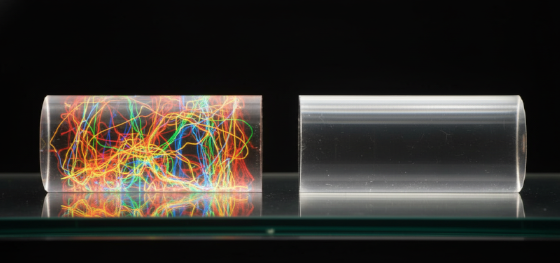
Aggressively removing the tough outer layer of a cheap extruded plastic block releases massive internal mechanical tension trapped during the original manufacturing process, causing the entire part to physically relax and deform.
Hardware engineers must ruthlessly mandate the use of stress-relieved polymer billets for any component requiring tight dimensional accuracy. Poured liquid polyamides naturally cool much slower than rapidly extruded plastic rods, resulting in a highly crystalline structure with practically zero internal trapped tension. This fundamentally stable chemistry allows aggressive subtractive milling without triggering catastrophic downstream warpage.
Attempting to cut corners by purchasing cheap, highly stressed extruded plastics actively destroys your tooling budget. Slicing heavily stressed materials forces machinists to perform multiple shallow, tedious cuts across both sides of the plate, constantly flipping the part to desperately balance the releasing tension. This massive increase in human labor completely obliterates any initial raw material cost savings.
Heavy industrial applications like massive crane sheaves or custom marine bearings strictly demand monolithic material stability. Poured polyamides exhibit significantly higher molecular weight and superior wear resistance compared to their extruded counterparts. Engineering heavy-duty mechanical linkages practically requires utilizing these premium stable billets to ensure long-term survival under brutal kinetic friction.
| Polymer Manufacturing Method | Internal Stress Level | Dimensional Stability During Cut | Ideal Factory Application |
|---|---|---|---|
| Extruded Polyamide (PA6) | Extremely High | Poor (Requires tedious balanced milling) | Small, low-tolerance washers |
| Poured Cast Polyamide (PA6G) | Very Low | Excellent (Holds tight bearing fits) | Heavy-duty industrial gears |
| Oil-Filled Cast Polyamide | Very Low | Excellent | Self-lubricating sliding wear pads |
| Glass-Filled Extruded (PA66-GF30) | High (Abrasive fibers) | Moderate (Destroys cutting tools rapidly) | High-heat automotive brackets |
Calculating Moisture Absorption Tolerances
Will high ambient factory humidity actually change the physical dimensions of a finished plastic gear?
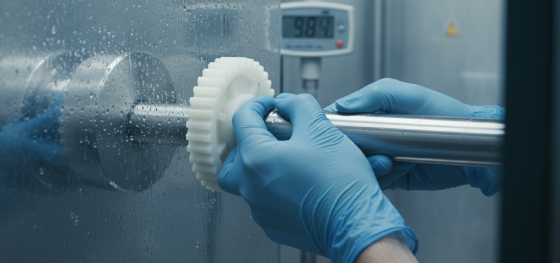
Yes. Polyamides aggressively absorb atmospheric water like a chemical sponge, physically swelling and expanding their external dimensions significantly in highly humid environments.
Ignoring critical moisture absorption tolerances guarantees catastrophic failures during global hardware deployments. A precision bearing housing milled perfectly to specification during a dry winter month in North America will violently seize up and fail when deployed to a highly humid tropical marine environment. The plastic physically swells, crushing the internal steel bearing entirely.
Procurement managers must rigorously calculate these severe environmental shifts before locking down the final CAD blueprints. Smart engineers deliberately oversize internal bores and undersize external diameters to mathematically compensate for this inevitable hygroscopic expansion. Failing to respect this chemical reality renders your quality control reports completely useless the moment the part boards a cargo ship.
Upgrading to highly specialized grades like Acetal (Delrin) entirely solves this specific humidity nightmare. Acetal absorbs practically zero atmospheric moisture, holding flawless micron-level dimensions completely regardless of external weather conditions. Navigating these tricky material selections separates elite engineering hardware teams from amateurs.
JUCHENG Hub: Dominating Heavy Duty Plastics
How do precision facilities prevent high-speed spindles from melting sensitive engineering polymers?
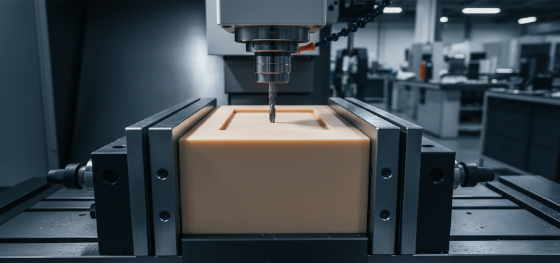
Elite machine shops deploy highly specialized dynamic toolpaths combined with aggressive, temperature-controlled air blasts or heavy flood coolant to brutally remove heat from the cutting zone instantly.
Jucheng Precision strictly utilizes premium stress-relieved polymer billets to guarantee absolute success for your complex mechanical assemblies. Our seasoned programmers understand exact chip evacuation dynamics, aggressively configuring the CAM software to peel massive volumes of material away without inducing dangerous thermal shock.
Executing critical reviews of your moisture absorption tolerances remains a mandatory step in our uncompromising Design for Manufacturing (DFM) audits. Operating a massive 150-machine 5-axis fleet ensures we possess the necessary hardware and deep material science expertise to deliver pristine, retail-ready components that survive the harshest industrial environments.
Frequently Asked Questions: Polymer Physics
Can a spinning endmill create a perfectly sharp internal square corner inside a heavy plastic pocket?
It is physically impossible. Round cutting tools mathematically leave an internal radius matching their own physical diameter. Hardware engineers must intelligently design specialized dog-bone reliefs into the CAD file to allow square mating components to fit properly.
Is it safe to blindly tap extremely deep threads directly into a solid polymer block?
Cutting sharp threads directly into plastic creates massive stress concentrators that strip out instantly under heavy torque. Securing high-load electronics enclosures absolutely requires physically melting ultrasonic brass heated inserts directly into the polymer walls for permanent holding power.
Does bead blasting improve the cosmetic surface finish of a freshly milled polyamides part?
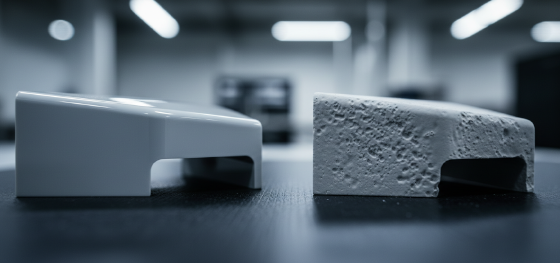
Actually, it heavily ruins it. Abrasive bead blasting severely pits the soft plastic surface, embedding microscopic glass shards directly into the material and leaving an ugly, chalky white residue. Restoring optical clarity or premium smoothness requires highly specialized chemical vapor polishing or manual buffing techniques.

