


In the world of precision machining, flatness is not a request. It is a religion. But any machinist will tell you a frustrating story. You take a perfectly flat sheet of standard aluminum. You machine it. And as you cut away the material, a hidden force awakens. The part begins to warp, bend, and twist, right before your eyes.

This is the curse of internal stress. It is the enemy of precision. And fighting this enemy requires a very special kind of material.
This is the world of MIC 6. It is not just another aluminum alloy. It is a promise. A promise of absolute, uncompromising flatness and stability. The process of Machining MIC 6 Aluminum is the foundation upon which the most precise machines are built.
content:
The Enemy Within: Internal Stress
The Solution: A Recipe for Stability
A Machinist's Dream: Predictable and Clean
Your Foundation for Precision
The Enemy Within: Internal Stress

Most standard aluminum plates, like 6061, are made by a rolling process. A large ingot is heated and squeezed through massive rollers, again and again, until it reaches the desired thickness.
This process is efficient. But it locks a huge amount of internal stress into the material's grain structure. The material is in a constant state of tension.
As long as the plate is whole, these stresses are balanced. But the moment you start to CNC machine it, you are cutting away material and releasing that stored energy. The stresses become unbalanced. This is what causes the material to warp. The more material you remove, the more it moves. For a high-precision part, this is a disaster.
The MIC 6 Solution: A Recipe for Stability
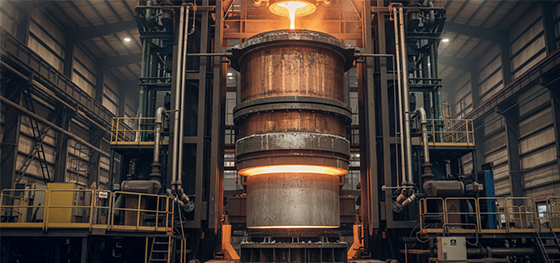
MIC 6 is completely different. It is not a rolled plate. It is a "cast aluminum tooling plate." This is the secret to its stability.
It is created using a special continuous casting process. The molten aluminum is poured and solidified in a way that creates a very fine, uniform, and completely stress-free grain structure. It has no memory of being rolled or squeezed.
Because there is virtually no internal stress, it will not warp, bend, or twist during machining. Even if you machine away 90% of the material. It stays dead flat. This predictability is its superpower.
After casting, both sides of the MIC 6 plate are machined to an extremely high-precision flatness and a pre-finished surface. This means it arrives at our workshop already flatter and more stable than any standard aluminum sheet.
A Machinist's Dream: Predictable and Clean
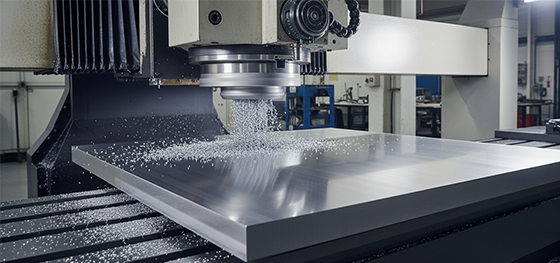
The process of Machining MIC 6 Aluminum is a pleasure for a machinist. Its fine grain structure and stability make it incredibly predictable.
It produces small, clean chips that do not stick to the tool. This allows for very high cutting speeds and feed rates. It is one of the most machinable of all cnc machining aluminum alloys.
This excellent machinability allows us to achieve an incredibly smooth surface finish. And because the material does not move, we can hold extremely tight dimensional and flatness tolerances with confidence.
| Property | Standard 6061-T6 Plate | MIC 6 Cast Tooling Plate |
|---|---|---|
| Internal Stress | High (from rolling) | Virtually Zero (from casting) |
| Stability During Machining | Poor (Prone to warping) | Excellent (Stays flat) |
| Supplied Flatness | Standard | High Precision |
| Strength | Good | Fair (Lower than 6061) |
Your Foundation for Precision
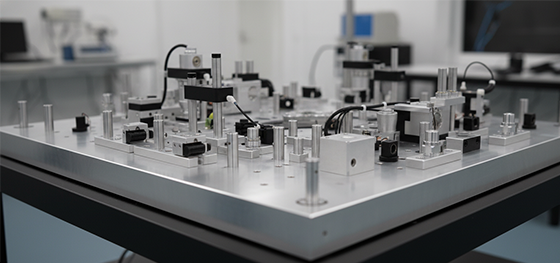
So, when do you choose MIC 6? The main trade-off is strength. It is not as strong as 6061-T6. You would not use it for a highly stressed structural part.
You choose MIC 6 when flatness and dimensional stability are your absolute, non-negotiable priorities.
It is the gold standard for any application that requires a perfect, stable base. This includes precision jigs and fixtures for inspection or assembly. It is used for the base plates of scientific instruments and robotics. In the semiconductor industry, it is used for vacuum chucks and wafer handling tables.
For these applications, the material's lower strength is irrelevant. Its stability is its superpower. It is the rock-solid foundation upon which precision is built. At JUCHENG, we understand the critical role of this material and have the large-format CNC machines to turn it into the perfectly flat and stable base your project demands.

