


Place two transparent cubes on an engineering table. From three feet away, they look identical. Both catch the light with crystalline perfection; both feel cold and substantial to the touch. Yet, strike one with a hammer, and it shatters into a thousand dangerous needles. Strike the other, and the hammer simply bounces off, leaving nothing but a faint scuff mark. This is the fundamental, high-stakes riddle of polycarbonate vs acrylic.

For designers and procurement managers, choosing between these two "clear" titans is rarely about aesthetics and almost always about environmental survival. One is a high-clarity artist designed for the spotlight; the other is a rugged soldier built to withstand impact that would pulverize glass. At Jucheng Precision, our expertise in acrylic cnc machining allows us to push these materials to their physical limits, but the success of your project starts with selecting the right chemical foundation before the first tool path is ever programmed.
Understanding the trade-offs between Polymethyl Methacrylate (PMMA) and Polycarbonate (PC) is the difference between a product that lasts a decade and one that fails in its first week of service. This guide strips away the marketing fluff to deliver a technical breakdown of the performance gaps, machining behaviors, and cost realities of the two most important transparent polymers in modern manufacturing.
content:
Molecular DNA: Chemistry of Transparency
Strength Analysis: The 250x Multiplier
Optical Fidelity: Light Transmission Realities
Surface Hardness: Scratch and Chemical Resistance
Machining Performance: Brittle vs Gummy
Engineering Matrix: The Final Decision
Molecular DNA: Chemistry of Transparency

To understand the performance gap, we must look at the backbone of the molecules. Acrylic, or PMMA, is a synthetic polymer of methyl methacrylate. It is essentially an organic glass. Its molecular structure is rigid and organized, which is exactly why it is so clear. Light passes through it with minimal interference because the chains are tightly packed and stable. This rigidity, however, is a double-edged sword. It makes the material hard, but it also makes it unable to absorb sudden energy.
Polycarbonate is a completely different creature. It is a thermoplastic containing carbonate groups in its chemical structure. At a microscopic level, these chains are much longer and more "entangled" than those in acrylic. When a force hits polycarbonate, these chains have the ability to shift and bend, absorbing the kinetic energy rather than snapping. This molecular flexibility is the reason why polycarbonate is used for bullet-resistant windows while acrylic is used for high-end aquarium tanks. In the polycarbonate vs acrylic debate, you are choosing between the brittle elegance of an "organic glass" and the flexible toughness of an "engineered resin."
Strength Analysis: The 250x Multiplier

In the engineering world, "impact strength" is the metric that usually settles the argument. If we use standard glass as our baseline (1x), the differences between the two plastics are staggering. Acrylic is roughly 17 times stronger than glass. It can take a moderate hit from a stray tool or a piece of debris without failing. For most display cases or decorative panels, this 17x multiplier is more than enough protection.
However, Polycarbonate exists in a different dimension of durability. It is rated at roughly 250 times the impact strength of glass. This is the material that survives sledgehammer blows and high-velocity projectiles. At Jucheng Precision, we recommend polycarbonate for machine guards, safety visors, and any functional part that lives in a "danger zone" where physical impact is a daily reality. While acrylic breaks into sharp, dangerous shards, polycarbonate tends to dent or deform. If safety and survival are your primary design constraints, the 250x multiplier of polycarbonate makes it the only viable choice.
Optical Fidelity: Light Transmission Realities
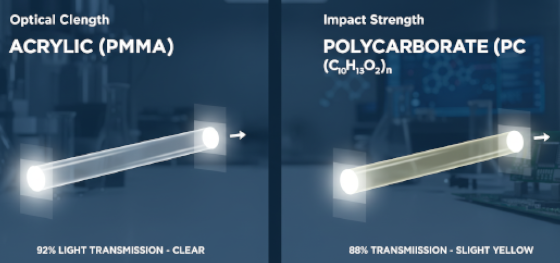
While polycarbonate wins on strength, acrylic takes the trophy for optical purity. Acrylic has a light transmission rate of approximately 92%. This is actually higher than most standard glass. It is "water white," meaning it has no inherent color tint. When you look through a thick block of machined acrylic, the image on the other side is undistorted and vivid. This is why it is the gold-standard for light pipes, camera lenses, and museum-grade displays.
Polycarbonate has a slightly lower light transmission rate, usually around 88%. More importantly, PC often has a very faint blue or yellow tint, which becomes more noticeable as the thickness of the part increases. Furthermore, polycarbonate is susceptible to UV degradation. Without specialized coatings, a polycarbonate part exposed to the sun will eventually turn yellow and become brittle. Acrylic, by contrast, is naturally UV stable. It will remain crystal clear for decades even in direct sunlight. If your project is a light-transmitting component for a premium automotive interior, acrylic’s 92% transmission and eternal clarity often outweigh polycarbonate’s strength.
Surface Hardness: Scratch and Chemical Resistance
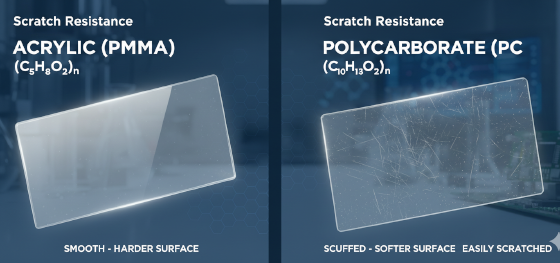
Surface durability is a hidden factor that often catches engineers by surprise after a few months of field use. Acrylic is a much harder material than polycarbonate. On the Rockwell M scale, acrylic typically rates higher, which translates to superior scratch resistance. You can wipe an acrylic panel with a dry cloth dozens of times without leaving visible swirls. This hardness also allows acrylic to be polished to a mirror shine using mechanical buffing wheels—a process that is far more difficult with the softer surface of polycarbonate.
Polycarbonate is relatively soft. It scratches very easily. A stray fingernail or a rough cleaning sponge can leave permanent scars on an untreated PC surface. While "hard-coated" versions of polycarbonate exist, they add significant cost to the raw material. Additionally, the two materials react differently to chemicals. Acrylic is sensitive to alcohols and certain solvents, which can cause it to "craze" or develop tiny surface cracks. Polycarbonate is generally more resistant to acids but can be severely damaged by strong alkalis. At JUCHENG, we advise our clients on these environmental factors to ensure the material choice survives not just the machine, but the cleaning protocols of the final user.
Machining Performance: Brittle vs Gummy
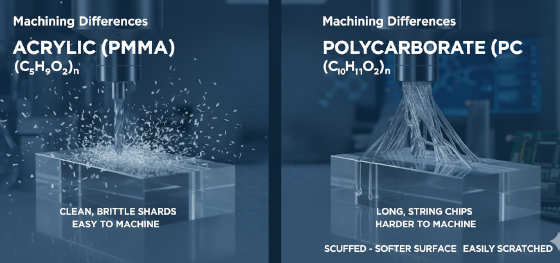
Inside our CNC centers, the polycarbonate vs acrylic choice dictates every parameter from spindle speed to tool geometry. Acrylic is a "clean" cutter. Because it is brittle, the chips fracture easily and fly away from the tool in crisp, cold flakes. This makes it easier to achieve a high-quality surface finish directly off the mill. However, that same brittleness makes acrylic prone to "chipping" at the edges if the tool isn't razor-sharp or if the feed rate is too aggressive.
Polycarbonate is a "gummy" material. Because it is designed to absorb energy, it resists the shearing action of the tool. Instead of fracturing, the chips want to peel away in long, stringy ribbons. These ribbons can wrap around the spindle and trap heat, leading to the plastic melting and welding itself to the cutter. Machining polycarbonate requires much lower speeds and higher chip loads to keep the material cool. While it won't chip at the edges like acrylic, it is much harder to "vapor polish" or mechanically buff to a high-gloss finish. For parts requiring intricate internal details and maximum transparency, the superior machinability of acrylic often makes it the preferred candidate in our precision workshop.
Engineering Matrix: The Final Decision
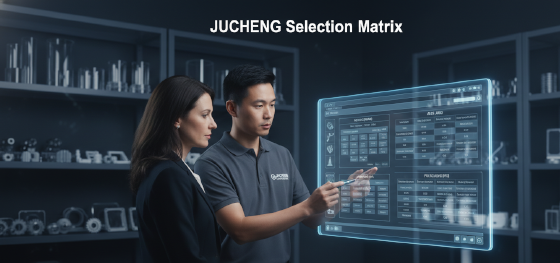
To simplify your material selection, Jucheng Precision uses a definitive comparison matrix. We weigh the physical realities against your specific application to ensure the lowest scrap rate and the highest field reliability.
| Feature | Acrylic (PMMA) | Polycarbonate (PC) |
|---|---|---|
| Impact Strength | Good (17x glass) | Extreme (250x glass) |
| Light Transmission | 92% (Optical Grade) | 88% (Standard Grade) |
| Scratch Resistance | High | Low |
| UV Stability | Excellent | Poor (unless coated) |
| Machinability | Excellent (Brittle) | Fair (Gummy) |
| Relative Cost | Lower | Higher |
The Verdict: If your part is a cosmetic display, a light guide, or an outdoor architectural panel where optical clarity and scratch resistance are paramount, Acrylic is the winner. If your part is a structural machine guard, a safety enclosure, or a component exposed to high-velocity impacts where safety is non-negotiable, Polycarbonate is the only answer. At Jucheng Precision, we stock both high-quality cast acrylic and engineering-grade polycarbonate to ensure your prototypes move to production without delay. Contact our engineering team today for a full DFM review and see how our plastic manufacturing expertise can clarify your design process.

