


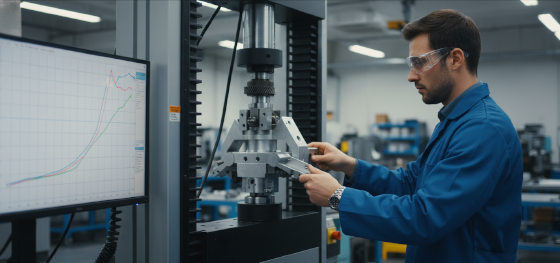
Hardware testing brutally exposes the physical limits of prototype manufacturing. Placing a fragile resin mockup onto a vibration table, subjecting it to a high-temperature automotive soak, or submerging it inside a hydrostatic pressure chamber instantly reveals whether your engineering team procured a visual toy or a functional surrogate. When the primary mandate is pure mechanical survival, the debate over vacuum casting vs 3d printing frequently narrows down to a specific clash of industrial titans: Vacuum Casting vs MJF (Multi Jet Fusion). Both technologies reject the fragile, anisotropic nature of early desktop fabrication, delivering components meant to withstand real-world punishment. However, their methods for achieving this durability are radically opposed. One fuses semi-crystalline nylon powder using targeted thermal radiation, generating incredibly tough, heat-resistant geometries. The other relies on exothermic thermoset chemistry, pouring specialized liquid polyurethanes to perfectly mimic the vast spectrum of final production plastics. Resolving this engineering dilemma requires aligning your specific Bill of Materials (BOM) with the rigid physics governing each process. This guide dissects the molecular reality of fused powder versus cross-linked liquids to ensure your prototype survives the lab.
Thermal Fusion: The Isotropic Nylon Advantage
Molecular Mimicry: The Polyurethane Spectrum
Fluid Dynamics: Porosity vs Hermetic Sealing
Integrated Manufacturing: Deploying the Right Physics
Thermal Fusion: The Isotropic Nylon Advantage
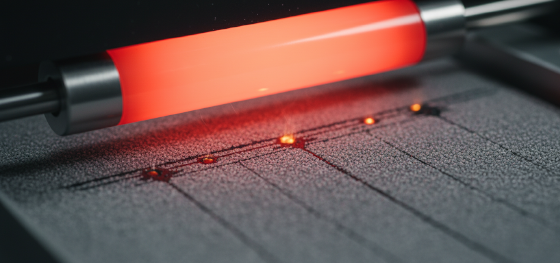
Structural integrity dictates the survival of under-the-hood automotive components and complex mechanical brackets. Multi Jet Fusion (MJF) directly addresses the historical weakness of additive manufacturing by eliminating severe Z-axis delamination. Operating inside a heated chamber, the HP MJF system spreads a microscopic layer of PA12 or PA11 nylon powder. Inkjet arrays meticulously deposit a light-absorbing fusing agent exactly where the part geometry dictates. An intense infrared sweep then flashes across the bed, melting the nylon particles together. This specific thermal event creates near-isotropic strength. A printed drone chassis or a robotic end-effector exhibits immense impact resistance and high tensile strength regardless of its build orientation. If your primary engineering mandate is subjecting a rigid component to aggressive mechanical abuse, high operating temperatures (up to 175°C), or abrasive friction, MJF nylon is the undisputed heavy-weight champion of rapid fabrication.
However, this thermal fusion comes with a significant cosmetic penalty. MJF parts emerge from the powder bed possessing a distinct, slightly granular texture resembling a sugar cube or fine sandstone. While post-processing techniques like vapor smoothing can seal the outer skin, the underlying material inherently remains opaque and visually industrial. You cannot print a crystal-clear lens using PA12 powder—it is physically impossible due to the crystalline nature of the nylon. You cannot print a glossy, piano-black medical monitor housing straight from the machine without extensive, expensive manual sanding and painting. Furthermore, while HP offers flexible TPU powders, the resulting elastomeric parts lack the smooth, skin-safe tactile feedback of a true rubber injection molding. MJF sacrifices material diversity and aesthetic perfection on the altar of sheer, uncompromising nylon durability.
Molecular Mimicry: The Polyurethane Spectrum
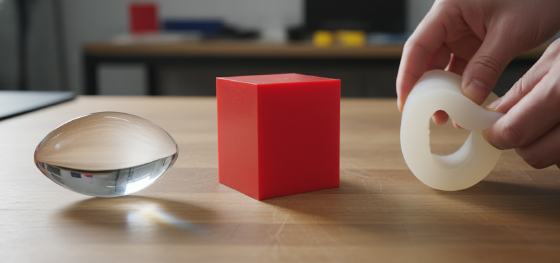
Chemical versatility often trumps raw tensile strength when validating complex consumer electronics or medical instruments. Engineers rarely design products consisting entirely of rigid grey nylon. Your assembly likely requires a rigid ABS-like internal chassis, a flexible TPE overmolded grip, and a perfectly transparent polycarbonate light guide. Polyurethane replication entirely dominates this arena of "Molecular Mimicry." Because the process occurs in a liquid state prior to exothermic cross-linking, technicians can manipulate the resin chemistry to simulate an astonishing array of production plastics. We don't just print "plastic"; we pour specific engineering simulants.
Pouring liquid thermosets inside a flexible silicone cavity unlocks capabilities that powder beds simply cannot fathom. We routinely cast medical-grade clear urethane (like Axson PX 5212) under deep vacuum, delivering optical transmission rates exceeding ninety percent for photometric testing. Need to validate the ergonomic squish of a waterproof seal? We cast specialized elastomers precisely matching any Shore A durometer, from a jelly-like 30A to a tire-hard 90A. Most critically, we execute flawless two-shot overmolding directly inside the tool, chemically bonding a soft rubber skin over a rigid internal core. When your testing protocol demands evaluating how a part looks, feels, and interacts optically, the vast liquid polyurethane spectrum thoroughly outclasses the monochromatic reality of fused nylon.
Fluid Dynamics: Porosity vs Hermetic Sealing
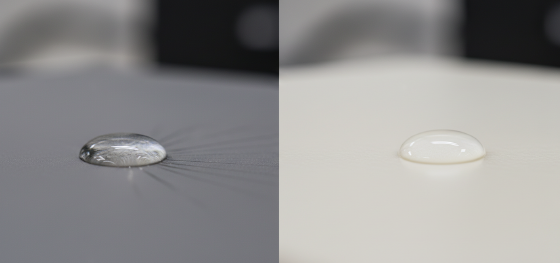
Hydrostatic testing immediately reveals the internal architecture of your prototype, often in catastrophic fashion. Designing liquid manifolds, pneumatic valve housings, or IP68-rated wearable devices introduces the critical metric of fluid containment. Additive manufacturing fundamentally struggles against microscopic porosity. Even though MJF achieves near-isotropic mechanical strength, the fusion of individual powder particles is rarely absolute. The process inherently traps microscopic voids within the cross-section of the wall. While thick-walled MJF components can hold pressure adequately, thin-walled sections (under 1.5mm) often "weep" fluid or lose pneumatic pressure over time as gas molecules migrate through the sintered lattice. Engineers attempting to validate a complex micro-fluidic device with MJF must frequently resort to messy, secondary operations—such as vacuum infiltration with epoxy—just to seal the porous nylon skin and prevent leakage.
Polyurethane replication is natively hermetic. The physics of the process guarantees a seal. The vacuum chamber radically evacuates all atmospheric gas from the liquid resin before it enters the silicone mold. The resulting exothermic reaction generates a monolithic, cross-linked chemical structure containing zero internal voids. A cast urethane housing inherently repels liquid and easily sustains high pneumatic pressure without any secondary sealing operations. If your physical testing requires submerging the unit underwater to test battery compartment seals, or pumping pressurized gas through internal cooling channels, choosing the liquid pouring methodology guarantees your data reflects the watertight reality of a final injection-molded component. You are testing your design's seal geometry, not fighting the inherent porosity of a fused powder bed.
Integrated Manufacturing: Deploying the Right Physics
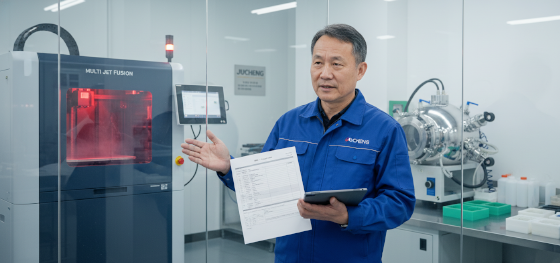
Engineering validation requires extreme pragmatism, not loyalty to a single machine type. Submitting a medical device assembly consisting of eight different materials entirely to a print farm guarantees a failed beta test. Conversely, machining soft silicone tools for a simple, high-heat engine bracket wastes critical time and tooling budget. Jucheng Precision protects your R&D timeline by operating a massive, technologically agnostic manufacturing campus. We house elite HP MJF industrial systems directly alongside advanced, climate-controlled casting cleanrooms. We do not force your round peg into a square hole; we simply route it to the machine that respects the laws of physics.
Analyzing your digital assembly triggers our rigorous DFM protocol. Our veteran manufacturing engineers dissect your Bill of Materials (BOM), aggressively routing your high-temperature, structurally abusive components directly to the nylon powder bed. A hidden internal chassis that needs to survive a drop test? Print it in PA12 on the MJF. Simultaneously, we divert your optically clear display screens, soft-touch buttons, and cosmetic external housings to our liquid thermoset laboratory. We then assemble these diverse components into a single, cohesive functional prototype. This hybrid strategy delivers a physical assembly where every individual component was manufactured using the optimal physics for its specific job. Stop compromising your test data with single-technology vendors. Leverage JUCHENG’s integrated industrial ecosystem to secure prototypes that survive the lab and accelerate your journey to mass production.

