


The manufacturing of medical implants is a responsibility that leaves zero margin for error. When a component is destined to live inside the human body for decades—whether as a spinal fusion cage, a cranial plate, or a dental abutment—the technical requirements transcend simple dimensional accuracy. It is a world where chemical purity is as critical as micron-level tolerances. This is the extreme environment of Machining Medical Grade PEEK. Polyetheretherketone (PEEK) has rightfully earned its place as the "gold standard" for biocompatible polymers, offering a modulus of elasticity that closely mimics human bone, reducing the risk of stress shielding that plagues traditional metal implants.

However, the transition from industrial-grade to implantable PEEK involves a radical shift in manufacturing philosophy. You cannot machine a medical device on the same equipment used for oily carbon steel or abrasive glass-filled plastics. Every chip removed and every tool used must be part of a strictly controlled, validated workflow. At Jucheng Precision, we have integrated our advanced peek cnc machining expertise with a rigorous ISO 13485 quality management system to provide our global healthcare partners with the highest levels of safety and precision.
For the medical engineer, choosing a partner for high-performance plastics is a matter of liability and ethics. This guide explores the technical nuances of handling implantable polymers, the invisible threat of contamination, and the specialized deburring techniques required to ensure every surface is ready for the operating room.
Defining Medical PEEK: The ISO 10993 Standard
Contamination Control: The Clean Machine Protocol
Achieving Burr-Free Precision for Implant Interfaces
Sterilization and the Dimensional Stability Battle
Traceability: Ensuring Safety from Resin to Patient
JUCHENG’s ISO 13485 Certified Medical Solution
Defining Medical PEEK: The ISO 10993 Standard
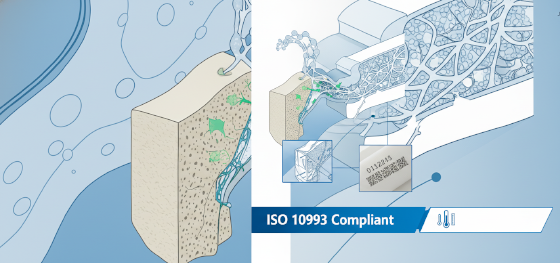
Not all PEEK is created equal. While industrial grades like Victrex 450G are excellent for aerospace valves, they are not intended for human contact. Medical Grade PEEK is a highly refined polymer that must undergo rigorous testing to meet ISO 10993 standards for biocompatibility. This involves verifying that the material is non-toxic, non-carcinogenic, and does not trigger an immune response when in permanent contact with human tissue or blood. The most critical grades are "Implantable Grade" PEEK, which offer the highest purity and are typically used in spinal surgery, trauma, and orthopedic implants.
At Jucheng Precision, our material handling protocol begins with verification. We exclusively source medical PEEK from certified manufacturers who provide comprehensive mill test reports (MTRs) and bio-data certificates. Understanding the mechanical modulus of PEEK is also vital; it has a modulus of roughly 3.6 GPa, which allows it to distribute loads similarly to natural bone. When Machining Medical Grade PEEK, our goal is to preserve these inherent mechanical properties, ensuring that the crystalline structure of the polymer remains undisturbed by excessive heat or mechanical shock during the cutting process.
Contamination Control: The Clean Machine Protocol
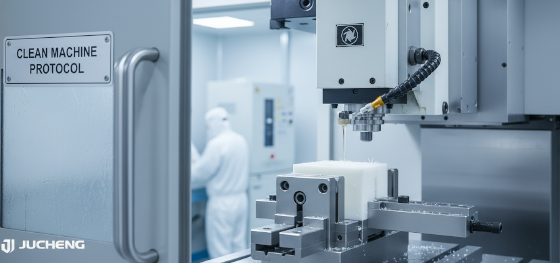
The greatest risk in medical plastics manufacturing is not the cutter—it is the environment. Cross-contamination is the silent killer of implant safety. If a microscopic particle of copper, iron, or lead is embedded in a PEEK surface during peek cnc machining, it can lead to localized toxicity or infection inside a patient. Standard machine shops often use mineral-oil-based coolants that can penetrate the surface of the plastic, making it nearly impossible to fully clean the part for sterile use.
JUCHENG eliminates this risk through our "Clean Machine Protocol." For medical runs, we utilize dedicated equipment that has been thoroughly stripped and sanitized. We avoid the use of standard coolants, instead opting for high-pressure filtered air or specialized vegetable-based oils that are biocompatible and easily removed via ultrasonic cleaning. Our workholding fixtures are made from medical-grade stainless steel or PEEK itself to prevent metal transfer. By maintaining a cleanroom-like environment at the machining interface, we ensure that the purity of the raw resin is maintained until the moment the part is packaged.
Achieving Burr-Free Precision for Implant Interfaces
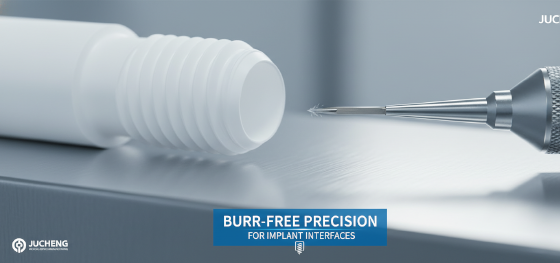
Implants often feature incredibly complex geometries—think of the aggressive serrations on a spinal cage or the tiny internal threads on a dental abutment. These features are designed to bite into bone or secure prosthetic teeth. In Machining Medical Grade PEEK, the challenge is that the material is naturally tough and ductile, which makes it prone to developing "micro-burrs" at the exit points of the tool. In an industrial part, a small burr is an aesthetic issue; in a medical part, a burr can detach in the bloodstream and cause a stroke or embolism.
We tackle this through a combination of "Tool-Path Optimization" and microscopic deburring. At Jucheng Precision, we use ultra-sharp, virgin carbide tooling for every medical order. We never use resharpened tools, which might have inconsistent edges. Our CNC programs utilize specific tool paths that "roll" the burr onto a non-critical surface where it can be removed easily. For final inspection, we use 40x magnification microscopes to verify that every edge is sharp but clean. This obsession with burr control ensures that our implants provide the exact tactile feel and osseointegration potential intended by the orthopedic surgeons who use them.
Sterilization and the Dimensional Stability Battle
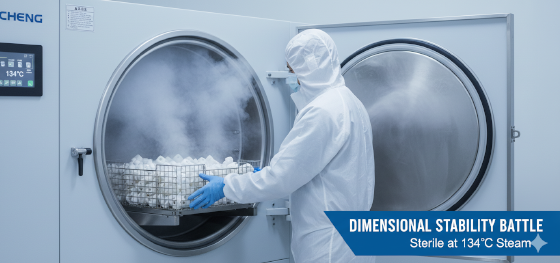
Manufacturing a medical part is only half the battle. The part must survive the hospital's sterilization protocols before it can be used. Most medical PEEK components are subjected to autoclaving—high-pressure steam sterilization at temperatures around 134°C. While PEEK is incredibly heat-resistant, the act of sterilization can trigger internal stresses trapped in the plastic during the peek cnc machining process. This leads to warping, where a perfectly round bore suddenly becomes an oval, rendering the part useless.
At Jucheng Precision, we mitigate this through a proprietary multi-stage annealing process. We relieve the internal stresses of the raw billet before machining, and we perform a secondary stabilization cycle after the roughing pass. This ensures that when the surgeon places the implant in the autoclave, it maintains its dimensional integrity perfectly. PEEK’s resistance to gamma radiation and ethylene oxide (EtO) sterilization further adds to its versatility, allowing it to be used in sterile-packed disposables and reusable surgical instruments alike. By understanding the material's thermal history, we provide parts that are not only precise today but remain stable for the entire lifecycle of the device.
Traceability: Ensuring Safety from Resin to Patient
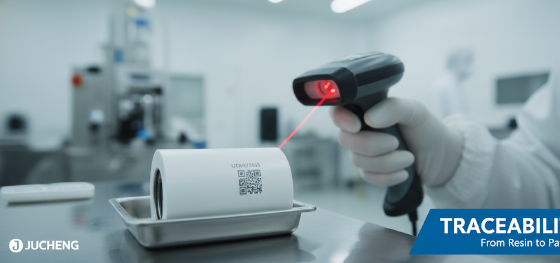
In the medical field, traceability is the ultimate safety net. If a defect is found in a specific batch of raw PEEK resin, the manufacturer must be able to identify every patient who received an implant from that batch. This "Golden Thread" of information is a mandatory requirement for FDA and CE MDR compliance. Machining Medical Grade PEEK without a comprehensive documentation system is a liability that Jucheng Precision never accepts.
We implement a lot-based traceability system that tracks the material Heat Number from the moment it enters our dock to the final shipping container. Every part is typically engraved with a Unique Device Identification (UDI) code using a low-heat fiber laser. This code contains the batch number and manufacturing date, allowing for instant recall if necessary. Our quality control documentation includes CMM reports and chemical analysis certificates, providing our clients with a "digital twin" of their physical parts. This transparency builds the trust necessary for high-stakes medical partnerships.
JUCHENG’s ISO 13485 Certified Medical Solution
Choosing Jucheng Precision for your peek cnc machining needs means choosing a partner who speaks the language of the medical industry. We don't just "cut plastic"; we validate processes. Our ISO 13485:2016 certification is proof of our commitment to a risk-based approach to manufacturing. We perform PFMEA (Process Failure Mode and Effects Analysis) for every new medical project to identify and mitigate risks before a single chip is cut.
From orthopedic surgery to diagnostic equipment, our expertise in Machining Medical Grade PEEK ensures that your designs are translated into safe, effective, and reliable medical devices. We understand the regulatory hurdles you face, and we provide the documentation and manufacturing consistency needed to clear them. Whether you are launching a revolutionary new heart valve component or a high-volume orthopedic screw set, Jucheng Precision has the technical rigor and the cleanroom-ready facility to bring your vision to life. Contact our engineering team today for a comprehensive DFM review and see how our biocompatible plastic solutions can move your medical innovation forward.

