


Precision manufacturing with high-performance polymers is often a high-stakes psychological battle against invisible physical forces. When you are working with Polyetheretherketone, a material that can cost more than a high-end titanium alloy per kilogram, a single mistake is not just a technical error—it is a massive financial blow. You can have the most expensive 5-axis machine and the sharpest diamond-tipped tools, yet your parts can still fail days or even weeks after they leave the machine shop. This failure rarely looks like a standard machining mistake. Instead, it manifests as a sudden, spontaneous fracture during final assembly or a subtle, agonizing drift in dimensions that renders a precision bearing bore completely useless. These failures are almost always caused by a phenomenon engineers call the "ghost in the plastic"—residual internal stress. This is why the PEEK Annealing Process is not an optional luxury; it is the mandatory technical foundation for any project that demands long-term reliability.

For designers in the aerospace, semiconductor, and medical sectors, precision is a promise that must be kept for the entire lifecycle of the product, not just for the moment of final inspection. PEEK is a semi-crystalline thermoplastic, meaning its polymer chains exist in a highly organized but extremely sensitive matrix. During the initial manufacturing of the raw stock—whether it is an extruded rod or a thick plate—these chains are violently stretched under high pressure and then rapidly frozen in place by cooling rollers. They are essentially coiled springs trapped in a solid state, waiting for the slightest excuse to snap back to their original form. Success in peek cnc machining is therefore not just about the quality of the cut; it is about knowing how to relax these molecular springs without sacrificing the part's geometric integrity. At Jucheng Precision, we have elevated thermal management to a science, ensuring that every component we deliver is structurally "dead"—stable, predictable, and ready for extreme environments.
This technical deep dive moves past the basic shop-floor chatter to explore the microscopic physics of thermal stabilization. We will examine how the PEEK Annealing Process reorganizes molecular chains, why the cooling rate is exponentially more dangerous than the heating rate, and how JUCHENG integrates these rigid scientific principles to eliminate scrap and deliver flawless results to our global partners. Understanding these variables is the difference between an engineering failure and a manufacturing masterpiece.
Molecular Tension: How Stress is Born in Extrusion
Crystallinity Management: Achieving the Golden Ratio
Thermal Cycle Specifics: Ramp, Soak, and Slow Cooling
Preventing Failures: Annealing for Deep Bores and Thin Walls
Dimensional Lock: Stability Across Global Climates
JUCHENG Integrated Assurance: Our Thermal Ecosystem
Molecular Tension: How Stress is Born in Extrusion

To master the manufacturing of PEEK, you must think like a chemist but act like a machinist. Every raw billet of PEEK that enters our facility arrives with a hidden "thermal history." When the material is extruded, it is pushed through a high-pressure die at temperatures exceeding 340°C. This mechanical force aligns the long-chain polymer molecules in the direction of the flow. Imagine thousands of tiny rubber bands being stretched to their limit and then immediately dunked in ice water. They are locked in a state of high tension, unable to return to their natural, randomized equilibrium.
The danger begins the moment a cutting tool engages the material during peek cnc machining. As you remove the outer "skin" of the raw stock, you are effectively cutting those rubber bands. The material reacts to this imbalance by bowing, twisting, or warping instantly. Furthermore, PEEK is highly notch-sensitive, meaning that any internal stress will seek out the smallest tool mark or scratch to begin a crack. The PEEK Annealing Process is the only proven method to "bleed off" this stored energy. By heating the material back up to its glass transition temperature (Tg) of approximately 143°C, and then carefully pushing into the crystallization range, we allow the molecules to vibrate, slide past each other, and settle into a relaxed, randomized state. This is more than just heating; it is a molecular reset that ensures the plastic doesn't fight back against your precision designs.
Crystallinity Management: Achieving the Golden Ratio
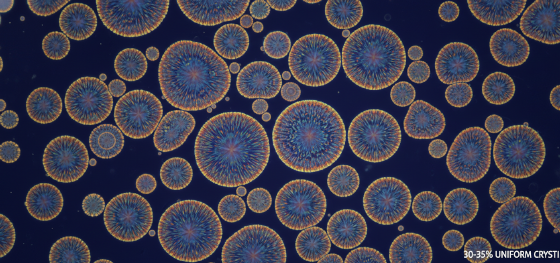
The mechanical strength of PEEK is derived from its semi-crystalline nature. A part that is purely amorphous will be transparent but weak; a part that is too crystalline will be extremely brittle. The "Golden Ratio" for engineering-grade PEEK is typically between 30% and 35% crystallinity. This balance provides the perfect blend of impact resistance, tensile strength, and chemical immunity. However, the cooling rate during extrusion often leaves the material with inconsistent crystallinity—the skin might be amorphous while the core is highly crystalline.
At Jucheng Precision, the PEEK Annealing Process serves a dual purpose: stress relief and crystallinity optimization. By holding the material at a specific "soak" temperature—usually between 200°C and 250°C—we provide the thermal energy needed for the crystals to grow uniformly throughout the entire cross-section of the part. This uniformity is vital for consistent machining behavior. If the crystallinity is uneven, the tool will experience different cutting forces as it moves from the surface to the center, leading to vibration (chatter) and poor surface finishes. By ensuring a homogenous molecular structure, we guarantee that the material responds to the CNC cutter with the same predictability as a high-grade aluminum, allowing us to achieve mirror-like finishes and aerospace tolerances.
Thermal Cycle Specifics: Ramp, Soak, and Slow Cooling

A common mistake in general machine shops is treating an annealing oven like a common kitchen appliance. You cannot simply "bake" PEEK and expect precision. A professional thermal stabilization cycle is a marathon of patience that can take upwards of 36 hours for thick-walled or complex components. The process begins with a very slow temperature ramp-up. If the exterior of the PEEK block heats up significantly faster than the core, the differential expansion will actually create *new* stresses, often leading to internal voids or surface cracks before the machining even begins.
The most technically demanding stage is the cooling phase. This is where JUCHENG’s rigor truly separates us from our competitors. If PEEK is cooled too quickly, the outer skin solidifies and shrinks while the interior remains expanded and molten. This creates a vacuum effect that pulls the material apart from the inside, resulting in "crazing" or microscopic internal fractures. We utilize programmable, forced-convection ovens that lower the temperature at a rate as slow as 5°C per hour. This extreme discipline allows the heat to escape from the core at the same rate it leaves the surface, ensuring the part remains physically stable. For a 100mm thick PEEK block, this might mean the oven stays closed for two full days. For our clients, this time-intensive process is the ultimate form of quality insurance, preventing a $5,000 part from becoming scrap in the final assembly.
Preventing Failures: Annealing for Deep Bores and Thin Walls

Why is the PEEK Annealing Process so critical for peek cnc machining? It comes down to the aggressive nature of modern tool paths. When we mill a thin-walled housing or drill a deep, intersecting manifold, we are fundamentally altering the structural balance of the material. In a non-annealed part, removing 70% of the material mass releases so much internal energy that the part will physically "collapse" or warp around the tool, causing the drill to bind and snap.
Jucheng Precision employs a "staged annealing" strategy to counter this. For ultra-precision components, we don't just anneal the raw stock. We rough-machine the part, leaving approximately 1.0mm of "extra meat" on all surfaces. We then perform a second, shorter annealing cycle. This releases the stresses introduced by the heavy material removal of the roughing stage. Finally, we put the part back on the CNC machine for a very light, high-speed finishing pass. This two-hit approach ensures that the final precision features—such as valve seats, O-ring grooves, and bearing bores—are cut into a material that is perfectly relaxed and cold. This is the only way to consistently maintain tolerances of +/- 0.01mm on large-format PEEK components, a feat that most shops simply cannot replicate.
Dimensional Lock: Stability Across Global Climates
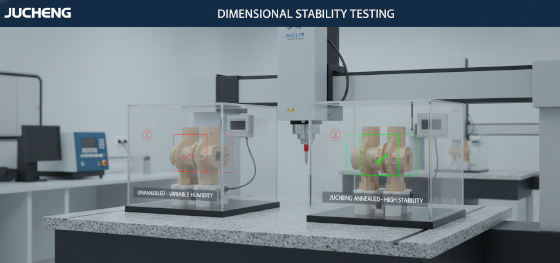
A hidden problem with non-stabilized PEEK is its reaction to environmental shifts. PEEK has a coefficient of thermal expansion that is significantly higher than steel. If a part is machined without proper annealing, its dimensions will shift every time the temperature or humidity changes. A part that fits perfectly in a climate-controlled room in Shenzhen may be out of tolerance by the time it reaches a humid facility in Singapore or a dry laboratory in Arizona. The internal stresses in the material act as a catalyst for these dimensional shifts.
Annealing provides a "dimensional lock." By removing the internal stress, we make the part indifferent to its past. It becomes a stable engineering component that only reacts to its environment in a linear, predictable way. This stability is mandatory for semiconductor wafer-handling equipment and aerospace fuel systems, where a shift of 0.05mm can cause a catastrophic leak or a system failure. At Jucheng Precision, we use this stability to our advantage, providing our clients with parts that remain dimensionally "true" from the moment they are packaged to the moment they are installed, regardless of the shipping route they take.
JUCHENG Integrated Assurance: Our Thermal Ecosystem

The greatest risk in high-performance plastic procurement is the fragmentation of the supply chain. If a machine shop buys un-annealed stock and cuts it without a thermal strategy, the engineer pays the price for the resulting failure. Jucheng Precision eliminates this risk by bringing the entire PEEK Annealing Process into our internal quality ecosystem. We don't just "outsource" our heat treatment; we manage every second and every degree of the cycle in-house.
Our facility is equipped with dedicated, calibrated industrial ovens that are isolated from the vibrations of the machining floor. We provide full thermal data logging for every annealing run, giving our medical and aerospace clients the documentation required for strict FDA or AS9100 compliance. We understand that for a medical implant or a satellite component, the "purity" of the manufacturing process is as critical as the dimensions on the print. By controlling the thermal life of the material from raw billet to finished component, JUCHENG offers an unmatched level of reliability. We don't just cut your parts; we ensure their atomic structure is optimized for the brutal stresses of the real world. Whether you are developing a revolutionary new medical device or a high-pressure subsea connector, trust the partner that respects the physics of the material. Contact Jucheng Precision today for a technical consultation on your next high-precision PEEK project.

